What painting a wall has in common with the power grid
Let’s take a break from the World Cup for a minute to talk about watching paint dry.
What do painting a wall and balancing the Norwegian electricity grid have in common? As I got to the bottom of yet another bucket of paint last weekend, my thoughts drifted back to my work with Statnett.
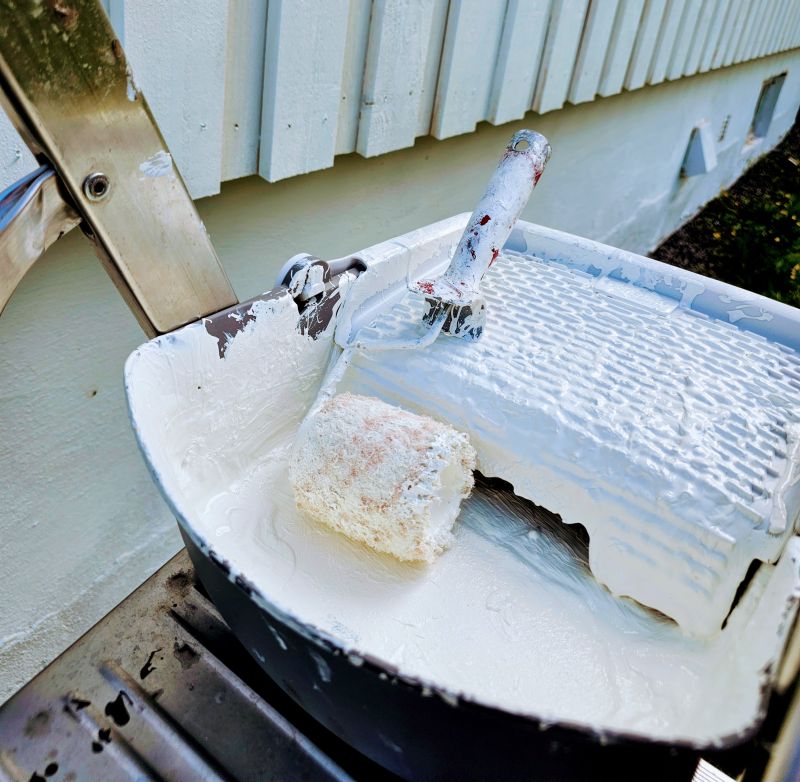
No matter how careful you are, some of the paint never makes it onto the wall. It ends up stuck in the brush, the roller, or splattered somewhere you’d rather not mention. It’s just a cost of doing business, but it still feels a bit wasteful.
It reminded me of something the clever folk at Statnett spend a lot of time thinking about: losses in the power system.
When electricity travels through the grid, not all of the energy reaches its final destination. Some is lost along the way, a bit like the paint left behind in the tray. As electricity demand grows, finding ways to wring more capacity and value out of the infrastructure we already have is critical. In fact, squeezing efficiency out of the existing grid through better data, digitalisation and smarter operation is a massive focus of Statnett’s current technology strategy.
Thankfully, a few hundred millilitres of paint disappearing into a roller is mostly a problem for my wallet. A few extra megawatts disappearing from the power system is a puzzle for people far smarter than me. Luckily, I get to work alongside those people, helping build the next-generation data platform that makes sense of the grid. It’s exactly why I find these projects so rewarding.
So, if you’d be interested in joining me at Bouvet to tackle projects and data problems like this, let’s chat. We have offices all over Norway, and in Stockholm.
Or, if you want to solve national grid problems right at the source, check out Statnett’s current openings.
This post first appeared on LinkedIn.